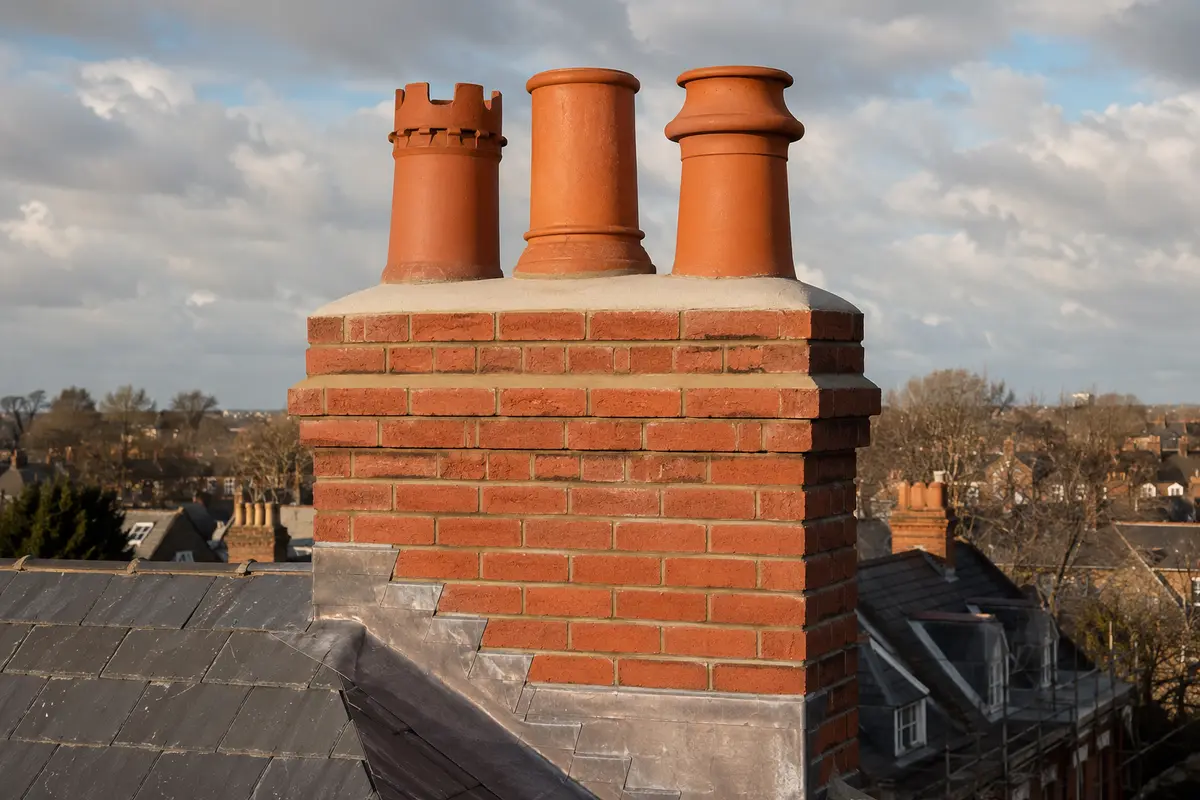
What chimney pots do
A pot extends the flue above the stack and can assist separation and draw. Its size and type should suit the flue and appliance. An unused flue may need a ventilating cap rather than complete sealing, while an active fire or stove may require a terminal chosen by a competent flue specialist.
Signs a pot needs attention
- Pot is cracked, leaning or visibly loose
- Mortar around its base is separating
- Pieces of flaunching appear on the roof or in gutters
- A cowl is corroded, missing or inappropriate
- Rain, nesting birds or downdraughts affect the flue
Flaunching repair
Flaunching is the shaped mortar bed around the pots. It holds them and slopes water away from the flue openings. Cracks and separation can admit water into the top courses. A successful repair removes loose material, checks the pot seating and forms a durable weathering profile rather than applying a thin surface patch.
Pot replacement and matching
Replacement may be preferred where terracotta is badly cracked or a pot cannot be safely reset. On visible period properties, proportions and appearance matter as well as function. Changes to terminals serving appliances should follow relevant combustion and ventilation guidance.
Bird guards, caps and cowls
Different terminals address different problems. A rain cap is not automatically suitable for an active flue; a bird guard must not restrict operation; anti-downdraught designs need correct selection. Confirm the flue’s use and appliance before installation.