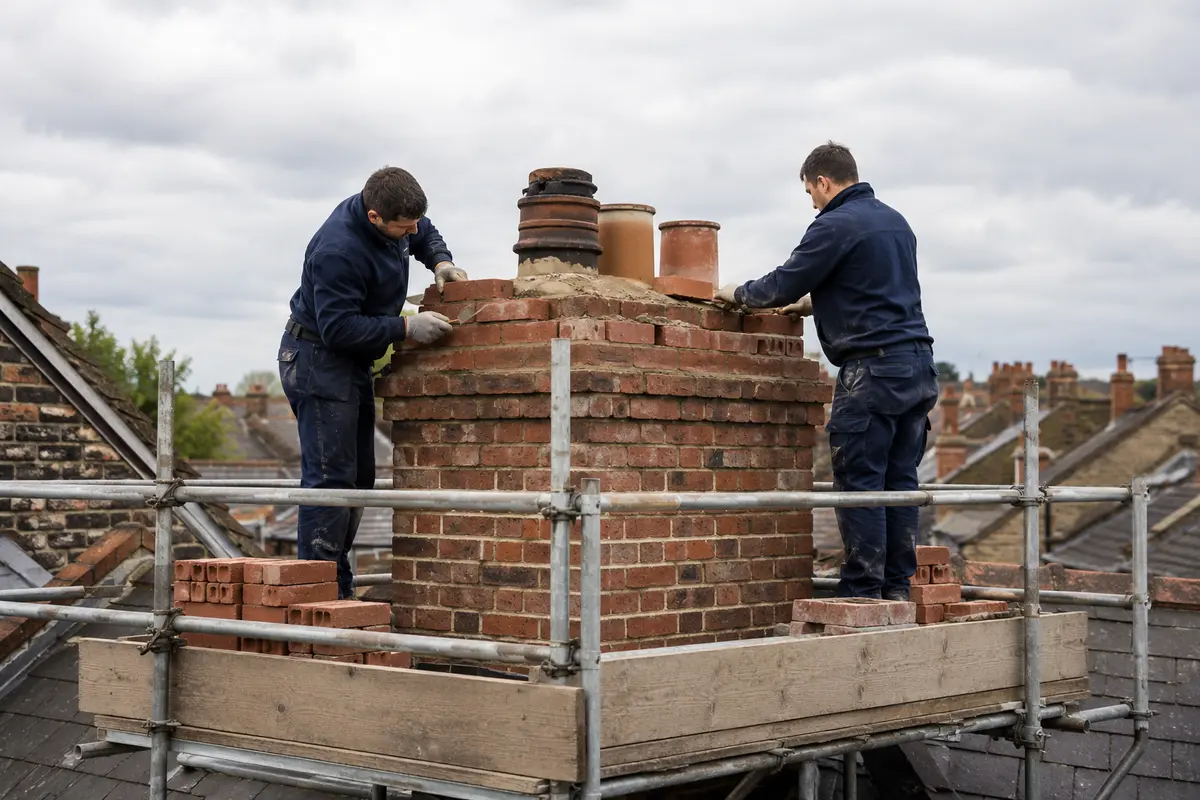
Every chimney has a different access problem
Height, roof pitch, dormers, conservatories, neighbouring land, overhead obstructions and the work itself affect access. Repointing several faces of a stack needs a stable working position; rebuilding requires room to handle bricks and mortar safely.
Why ladders are not the default
A ladder may be suitable for limited low-risk access only where a proper assessment supports it. Chimney work involves both hands, tools and materials at a roof edge or above a sloping surface. The HSE’s work-at-height guidance prioritises avoiding falls and selecting suitable equipment.
What a quotation should state
- Whether access is included or separately priced
- Which faces of the stack can be reached
- How roof coverings will be protected
- Whether licences or neighbouring access may be required
- What happens if additional defects become visible from the platform
Scaffold does not diagnose the repair
Access permits close inspection but should not become a reason to expand the scope without evidence. If a different defect is uncovered, document it and agree any additional work before proceeding.
Public highways and neighbouring land
Some scaffold arrangements extend over a pavement or require access from adjoining property. Licences, permissions and lead times should be identified before a start date is promised. A clear access plan avoids last-minute changes to the repair scope.
Protecting the property
Scaffold loading, ties, ladder access and material storage should be planned around the building. Fragile roof coverings and glass extensions need particular protection. When the platform is removed, check that tiles, gutters and finishes disturbed by access have been left secure.