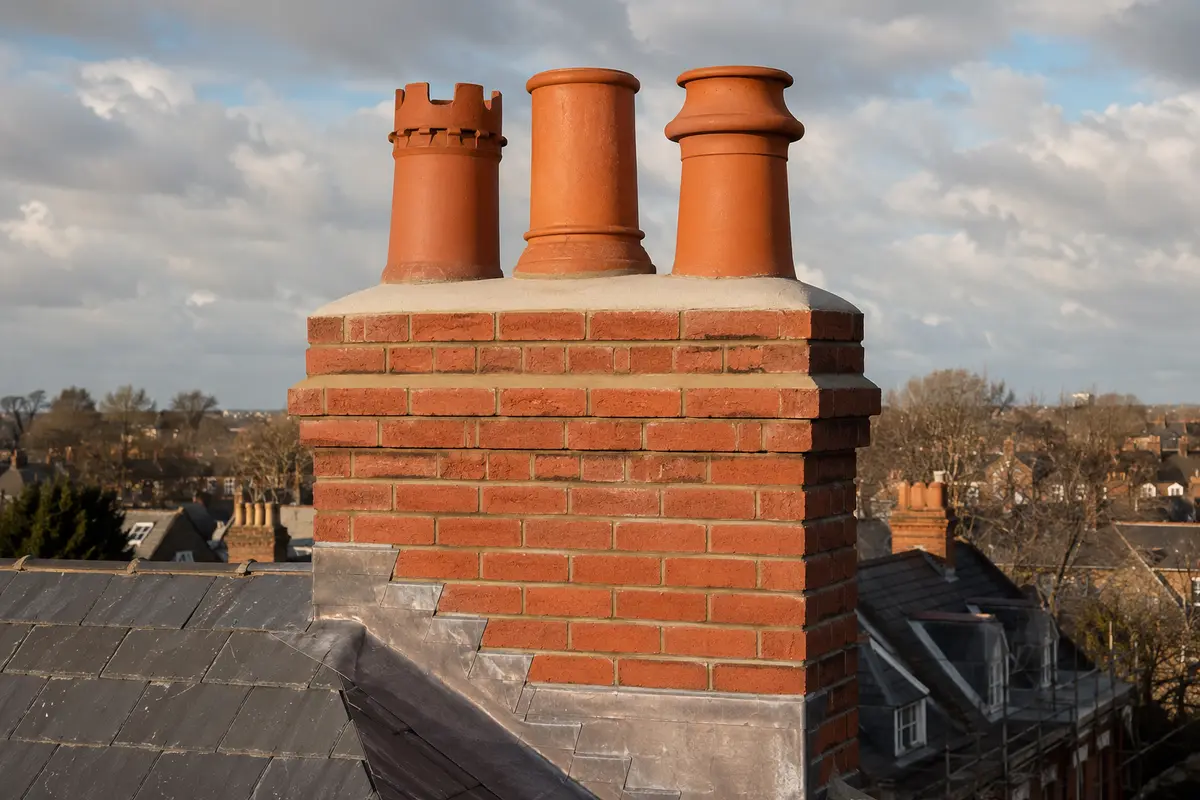
Failed mortar joints
Open joints permit wind-driven rain into the masonry. Water can travel within the stack before becoming visible. Repointing helps when the stack is stable and joint failure is the primary route.
Lead flashing defects
Aprons, step flashings, soakers and back gutters direct water around the roof-to-stack junction. Lifted, split or poorly lapped lead can admit water. Adjacent tiles and slates should be checked at the same time.
Cracked flaunching
Flaunching around the pots is exposed and can crack away from terracotta or brickwork. Moisture entering here affects the top courses and may migrate down the stack.
Open or unsuitable terminals
Rain can enter a flue directly, but the answer is not always a generic cap. Active appliances and unused flues have different ventilation and terminal requirements. Confirm use before choosing a pot or cowl.
Porous or damaged bricks
Spalled faces and open cracks hold water. Individual replacement may be enough, while widespread masonry failure can require more extensive work.
Roof coverings and underlay
A broken slate higher up the slope can send water toward the chimney internally. Underlay and timber may redirect the leak before it appears. The damp position inside is therefore a clue, not proof of the external entry point.
Condensation
Cold, unused or poorly ventilated flues can collect condensation. Moisture may carry old soot salts through plaster and resemble a weather leak. Patterns related to cold weather rather than rainfall can help distinguish this possibility.
Building a useful timeline
Record whether the mark worsens during particular wind directions, prolonged rain, appliance use or cold spells. Note recent roof, loft or fireplace alterations. This context makes an inspection more efficient.
A coating or bead of sealant is not a universal chimney-leak repair. Treat an identified defect with compatible materials and preserve necessary ventilation.